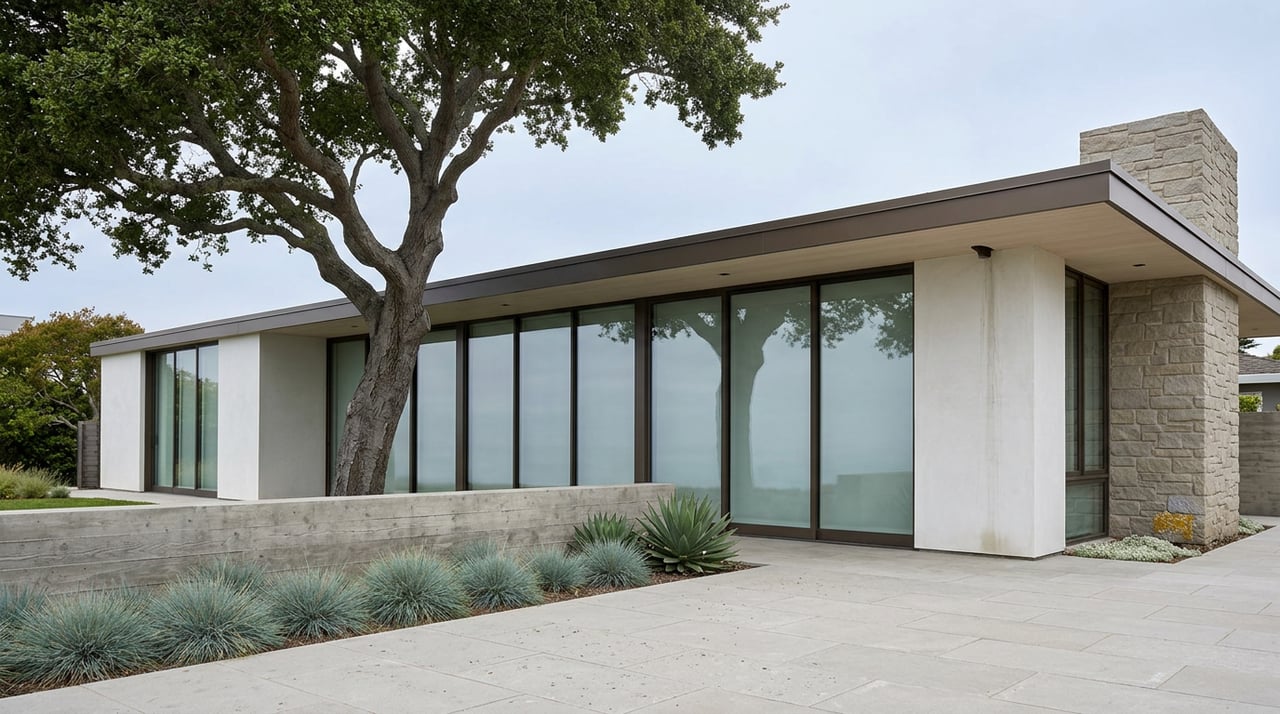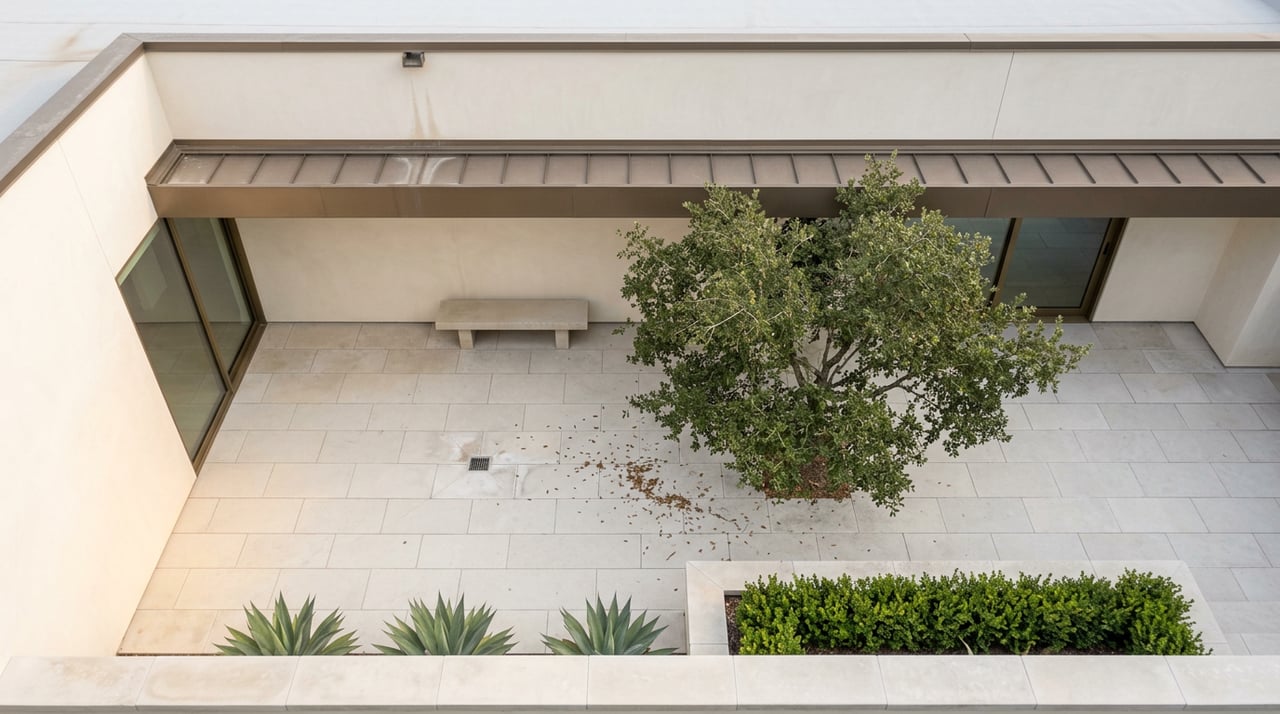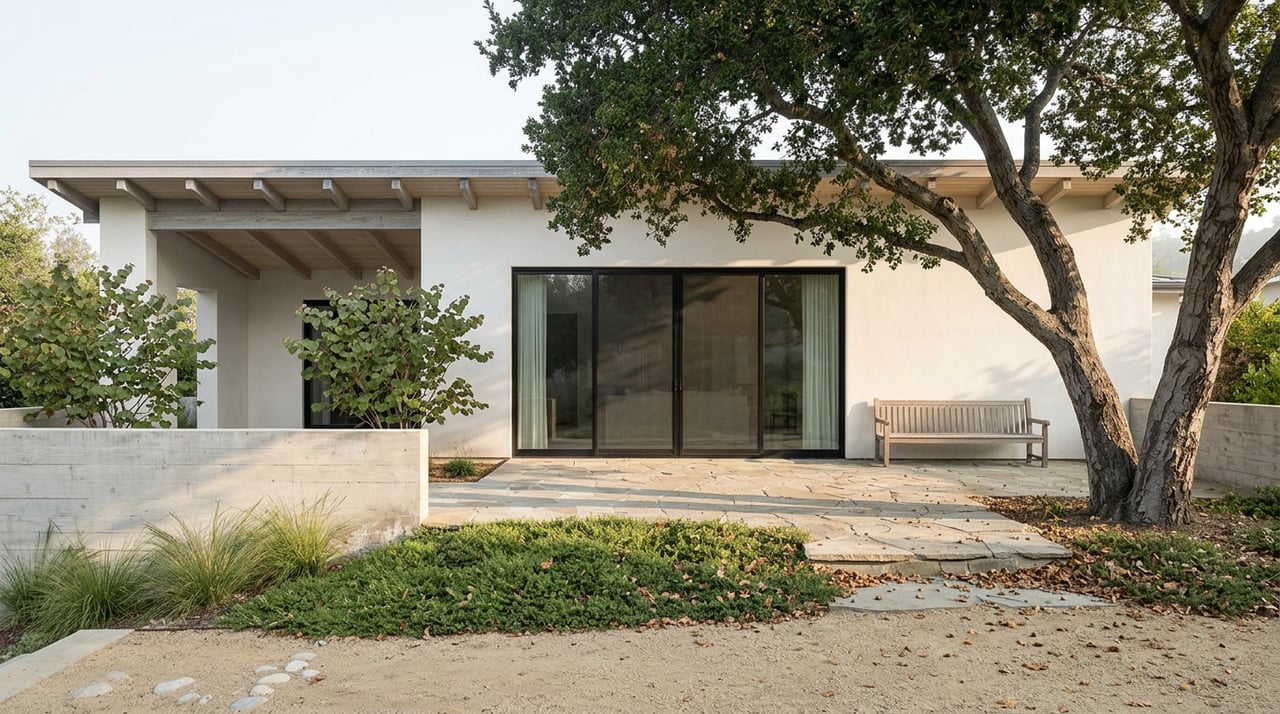
Say you're two months from listing a home on one of Agoura Hills' larger hillside lots, the kind with a mature oak holding down the backyard, and your contractor wants to reshape the patio to fit a pool before the listing photos go up. You've heard the city just rewrote its tree rules to make things easier on homeowners, so you assume that means faster paperwork and lower fees across the board. For most of what happens in a typical Agoura Hills yard, that assumption holds. For the one tree doing the most work to make your listing photos look good, it doesn't.
The city adopted a consolidated Protected Tree Ordinance, numbered 25-482, after its Planning Commission voted unanimously in October 2025 to forward the rewrite to City Council. Principal Planner Robbie Necipich framed the project publicly as a fix for enforcement gaps and slow permit timelines, with an explicit goal of reducing costs for single-family homeowners. That framing is accurate for the bulk of what homeowners actually do to their trees. It is not the whole story if the tree in question is a large, established specimen, because the same rewrite that streamlined the small stuff also raised the mitigation owed for removing the big stuff.
What the ordinance actually changes
Before this rewrite, Agoura Hills protected any oak with a trunk diameter of two inches or more, a threshold so low that a volunteer seedling barely thicker than a garden hose technically triggered the same permit process as an established specimen. Mitigation for an approved removal was calculated using the percentage of canopy or root zone affected, with a separate rule setting a hard floor: no fewer than four native replacement trees for any oak removed or relocated, no matter how that percentage worked out.
The new ordinance moves the size threshold to six inches in trunk diameter for nearly every protected species, roughly the width of a soda can, with one exception. Scrub oak stays protected at any size, because its shrubby, multi-stem form rarely produces a single trunk that would clear six inches anyway. The ordinance also adds two species to the protected list for the first time: California sycamore and Southern California black walnut, both now covered at that same six-inch threshold.
On the mitigation side, the canopy and root-zone percentage method is gone. Replacement obligations are now scaled directly to the trunk diameter of the tree removed, a change city staff described as increasing mitigation specifically for large-tree removals, even as the rest of the ordinance was built to reduce homeowner costs. Here's the comparison in one place:
| What changed | Before Ordinance 25-482 | Under the new rule |
|---|---|---|
| Protected size threshold | Two inches in trunk diameter for oaks | Six inches for most species, any size for scrub oak |
| Species covered | Native oak species only | Adds California sycamore and Southern California black walnut |
| Removal mitigation | Canopy or root-zone percentage, four-tree floor | Scaled directly to the trunk diameter of the tree removed |
| Permit structure | One general permit process | Three types: General, Hazardous, and Development |
| Fire-related removal fee | Standard permit fee applied | Free when tied to a fire department order |
| Minor permit fee | Around $250 | Around $250, with a separate fee resolution expected |
The catch for anyone with a legacy oak on the lot
A homeowner clearing a young sycamore volunteer under six inches, or trimming deadwood off a mature oak, genuinely has less to deal with now than a year ago. That kind of routine maintenance, along with pruning branches under three inches that doesn't reduce the crown, has never required a permit and still doesn't.
The math changes the moment you're talking about removing or heavily encroaching on a tree big enough to matter to the property's character. Under the old percentage-based system, a large oak's mitigation depended on how much of its canopy or root zone the project disturbed, with four trees as the guaranteed minimum regardless of how that percentage came out. Under the new diameter-scaled system, a wide, established trunk drives the mitigation number directly, and city staff have been explicit that this was designed to raise what large removals owe, not lower it.
That's the part of the rewrite that a seller planning pre-listing improvements needs to sit with. The trees that make an Agoura Hills backyard photograph well, the wide canopy oaks and the sycamores with real height on them, are exactly the ones where the new math costs more, not less, if your project requires removing them.
Where the timeline gets tight
Any construction near a protected tree, not just removal, needs a permit before work starts. The protected zone extends from the tree's dripline out an additional five feet, so a pool shell, a retaining wall, or even a new irrigation trench can fall inside that boundary without the tree itself being touched. If your project sits in that zone, you need a Development Tree Permit, the category reserved for work tied to new construction, and that category typically calls for a full Protected Tree Report from a certified consultant before the city will sign off.
Escrow doesn't pause for that. If a listing goes live before the tree permit clears, or worse, if work starts before the permit is issued, sellers can end up disclosing an open code enforcement issue at the exact moment they're trying to close a sale. The ordinance rewrite tried to reduce a related source of friction, too. Patricia Schultz, representing the Hill Rise Open Space Association, told the Planning Commission that homeowners often feel caught between fire-safety guidance calling for clearance around structures and tree preservation rules that penalize the same trimming. The new Hazardous Tree Permit category exists partly to resolve that tension, waiving the fee entirely when the removal is tied to a fire department order.
What this means before you break ground
A few practical moves follow directly from how the ordinance is now structured.
- If a pool or addition can be redesigned to route around a protected tree instead of through its zone, ask about the fee waiver the city built in for exactly that kind of design modification.
- If you're clearing a young oak that isn't scrub oak and measures under six inches in trunk diameter, you may not need a permit at all under the new threshold, which wasn't true a year ago.
- If the work is prompted by a fire-safety concern rather than a renovation, ask whether it qualifies for the Hazardous Tree Permit tied to a fire department order, since that path is free.
- Before finalizing pool or patio design near any mature tree, talk to the city's Oak Tree Consultant, who holds hours at City Hall on Tuesdays and can flag protected-zone conflicts before your contractor pours anything.
- The current roughly $250 fee for minor permits is described by city staff as provisional, with a formal fee resolution still pending as of the ordinance's adoption, so timing routine permit work sooner rather than later avoids any increase once that resolution lands.
None of this makes a legacy oak a liability. A mature tree is still one of the strongest visual assets a listing in this city can have, and buyers moving to Agoura Hills for the tree canopy and hillside character are not going to be talked out of that preference. What changed is the cost of altering one of those trees as part of getting a home ready to sell, and that cost moved in the opposite direction from the ordinance's headline pitch.
If you're weighing a pre-listing project on a lot with real tree cover, or trying to figure out what a specific parcel in Agoura Hills can support before you commit to a design, that's a conversation worth having early, not after the permit application is already in the queue. It's also the kind of detail that matters if you're evaluating a property for its improvement potential rather than just its current condition.
A few questions before you break ground
Do I need a permit just to trim dead branches off my oak? No. Routine maintenance, including removing deadwood, watering, insect treatment, and pruning branches under three inches that don't reduce the tree's crown, has never required a permit and still doesn't under the new ordinance.
What if a tree is a safety hazard after storm damage? The ordinance allows for emergency action following a visual inspection that finds a tree hazardous, with notice to the Community Development Department provided beforehand when possible. Removals tied to an actual fire department order fall under the Hazardous Tree Permit category, which is free.
Does a young oak that sprouted on its own count as protected? Only if it's a scrub oak, which is protected at any size. Other oak species, along with the newly added sycamore and black walnut, are only protected once the trunk reaches six inches in diameter, up from the two-inch threshold that used to apply to all of them.
Every lot in this city carries its own mix of protected trees, slope, and prior permit history, and the fastest way to find out what your specific property is dealing with is a direct conversation before design work starts, not after. Tessa Cosentino works Agoura Hills alongside Malibu and the surrounding canyon and coastal communities, and can help you think through timing before a tree permit becomes a closing-week surprise. Let's Chat — Schedule a Time to Connect.